
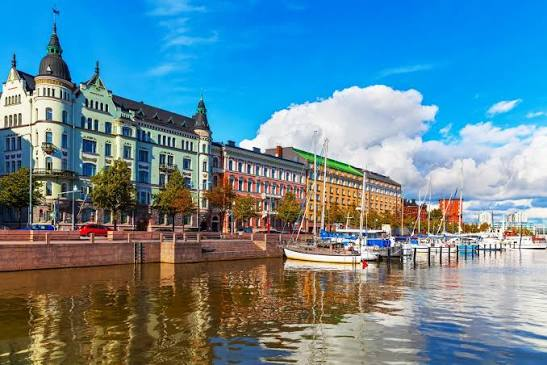
Ditch the Car: The World’s Most Walkable Cities
We were three days from flying to Seville when I finally cancelled the rental car, and the reason was petty: the pickup desk sat nine kilometres from our apartment, which meant a €28 taxi each way before anyone had turned a wheel. Four of us, two kids aged six and eleven, eight nights in the old town, and the whole trip ran on foot for a total transport spend of €61, most of it the airport bus at €4 a head. That cancellation taught me more about walkable cities than any list I had read, because it was the logistics, not the romance, that decided it.
The car is not the expensive part, the parking is
Renting in southern Spain in April costs maybe €140 for the week, which sounds like nothing until you price the garage under the apartment at €22 a night and the fuel you burn circling for it. Add the taxi to collect the thing and the child seats at €12 a day each and I was looking at €420 for the privilege of driving somewhere I would then walk anyway. What settled it was a rule I now apply everywhere: count the fixed costs, not the daily rate. Rental desks quote the rate because it is the small number.
- the taxi or train to the pickup desk, both directions
- parking at the accommodation, per night, not per stay
- child seats, which are never included and always charged per day
- the fuel you buy back at the depot rate rather than the pump
For Seville, the arithmetic was not close. The old town is 3.5 kilometres across, the cathedral to the Alcázar is a nine-minute walk with a six-year-old’s pace baked in, and the tram, when we used it twice, cost €1.40 a ride.
Where the walking breaks down
Porto was the trip that humbled me. The centre is genuinely compact and the Ribeira to Clérigos climb is twenty minutes if nobody complains, but Portugal’s second city is built on a gorge, and by the fourth day my eleven-year-old had stopped asking to go anywhere that involved the words “back up”. What we should have done is base ourselves on the flat side and treat the river as a one-way excursion rather than a daily crossing. Walking cities are not uniformly flat, and the gradient matters more than the distance on any map.
Vienna rewarded the opposite instinct. The U-Bahn took us everywhere for €2.40 a ride, but the inner districts are so dense that we ended up using it twice in five days, mostly because the Ringstrasse loop is a comfortable 40-minute circuit that a tired child will do without noticing. Where the car question really bites is the day trip: getting to somewhere like Melk without one means a train and a bus and a schedule, and that is the point at which I would rent for 24 hours and hand it back.
Between cities, the train usually wins outright on these routes. Amsterdam to Barcelona is the exception that proves it, because the rail option runs through Paris with a change and eats a full day and a half, so for that leg I book flights and treat the airport transfer as the real cost of the trip. When I priced the comparison I run first for a family of four in July, the fares landed near €390 return, and that number only makes sense once you have worked out that the alternative is 14 hours of your holiday gone. You can check the current fares for that route here if you are weighing the same decision.
What I have stopped doing is choosing a city for its walkability score. I choose it for the shape of the first kilometre from the apartment to the nearest square, because that is the walk you will make twelve times whether you planned to or not, and if it is pleasant the children stop negotiating and the whole trip gets cheaper.


